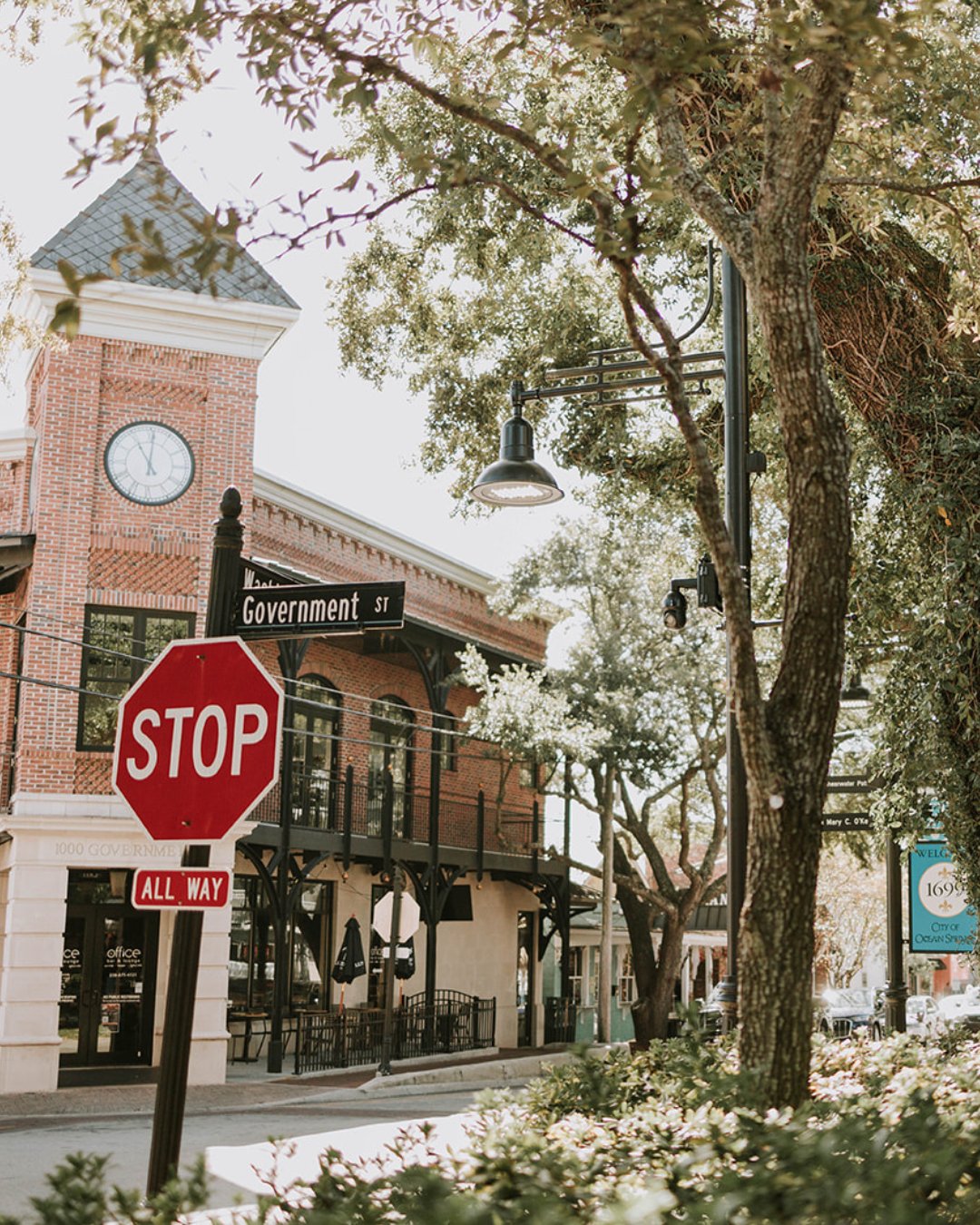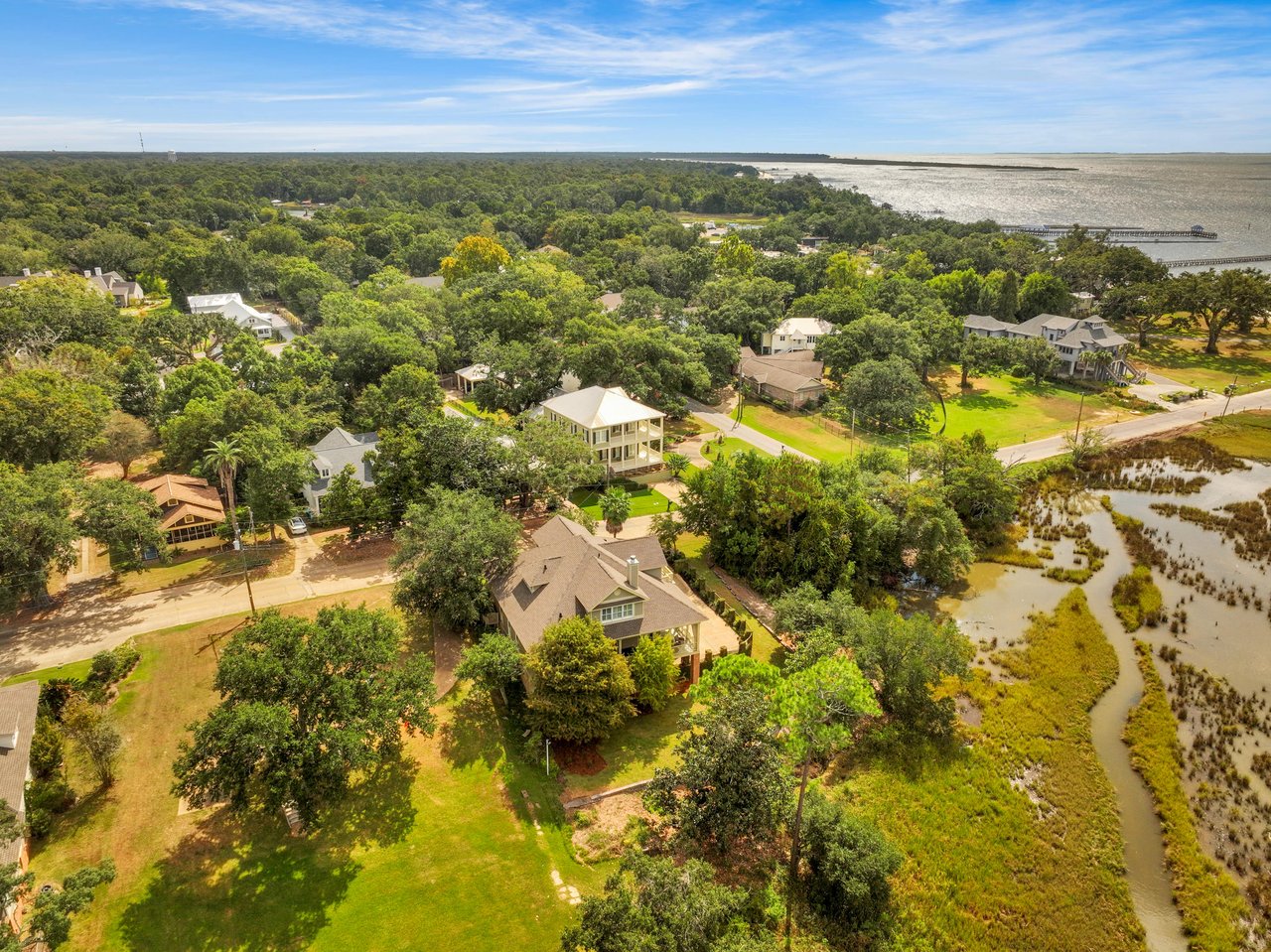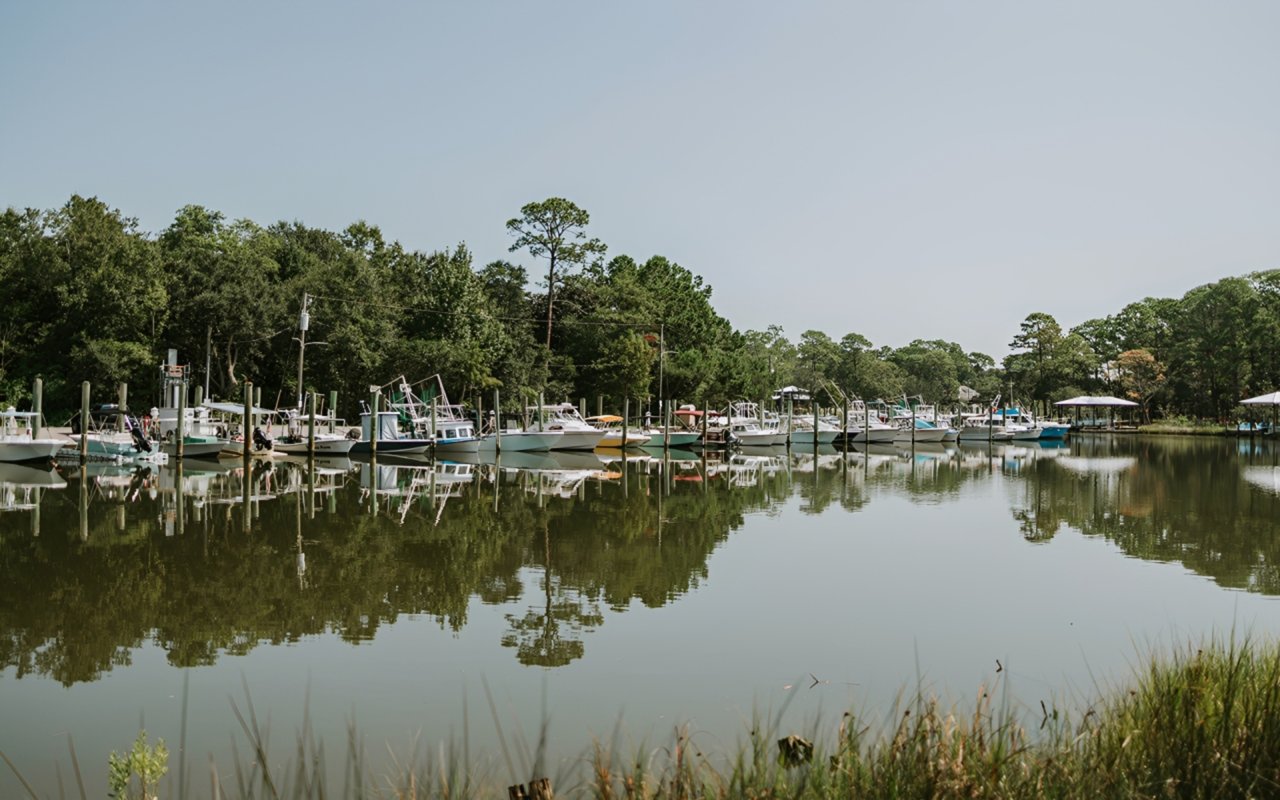
Ask someone who just moved to downtown Ocean Springs where the center of their neighborhood is, and they will point down Washington Avenue toward the shops and the arts center. Ask the same question in Gulf Hills and nobody points down a street. They trace a shape with a finger instead, the bend where Fort Bayou curls behind the golf course before it narrows into marsh grass on its way toward Vancleave.
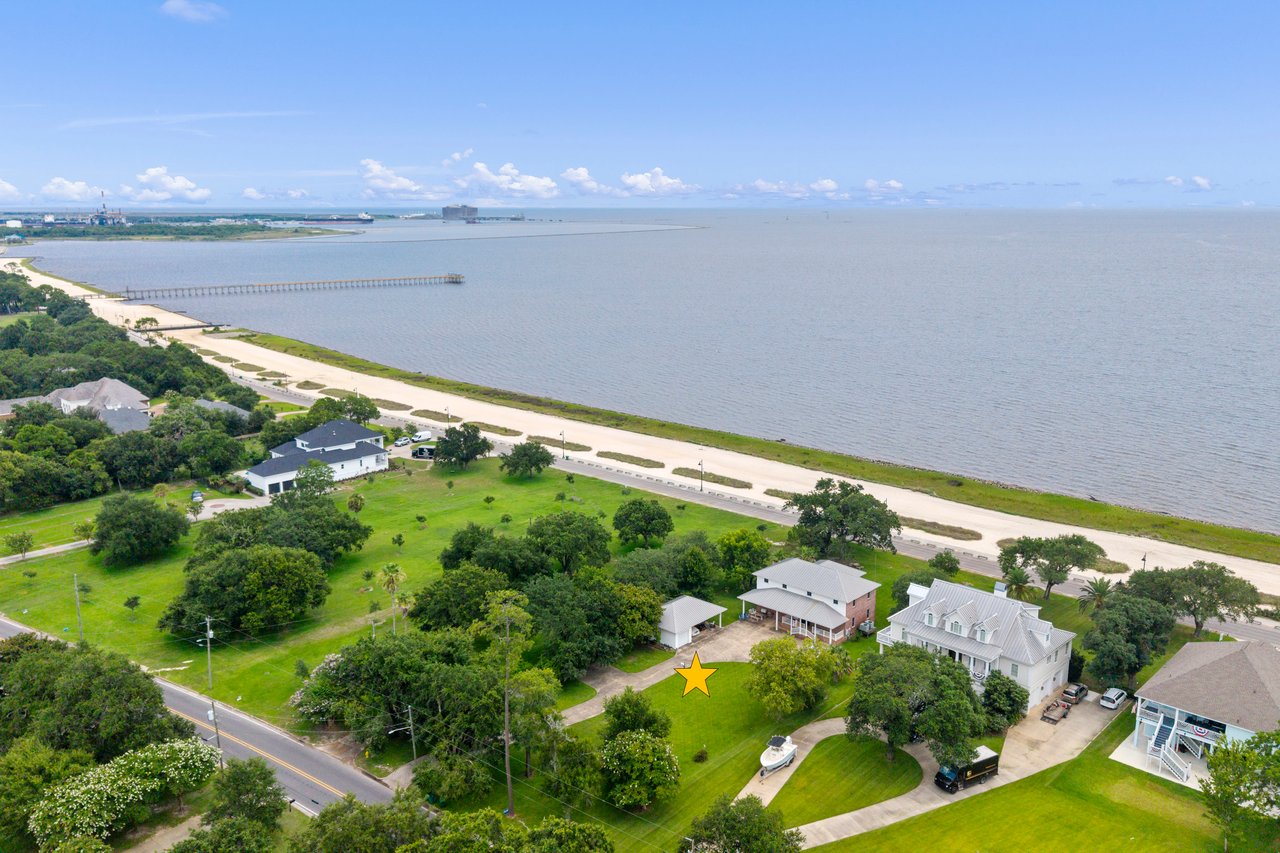
That difference is not atmosphere. It is how the neighborhood actually functions. In most of Ocean Springs, social life organizes itself along a walkable grid. In Gulf Hills, it organizes itself along water, and once you notice that every landmark in the neighborhood faces the same stretch of bayou, the whole place reads differently.
One Bend, Every Landmark
Drive into Gulf Hills and there is no strip of storefronts to announce you have arrived. There are curving residential roads, mature oaks, and a run of golf greens, and then the hotel appears at the bend almost without warning. Gulf Hills Hotel + Resort sits directly on Fort Bayou, and it markets itself, accurately, as Ocean Springs' only waterfront hotel. Across the parking lot, close enough to walk after a round, sits Capone's Speakeasy Lounge and Restaurant, the bar and dining room built into Gulf Hills Golf Club. Both properties face the same water. Neither was built with a downtown commercial strip in mind, because there isn't one here to build toward.
A Fishing Village Before It Was a Resort
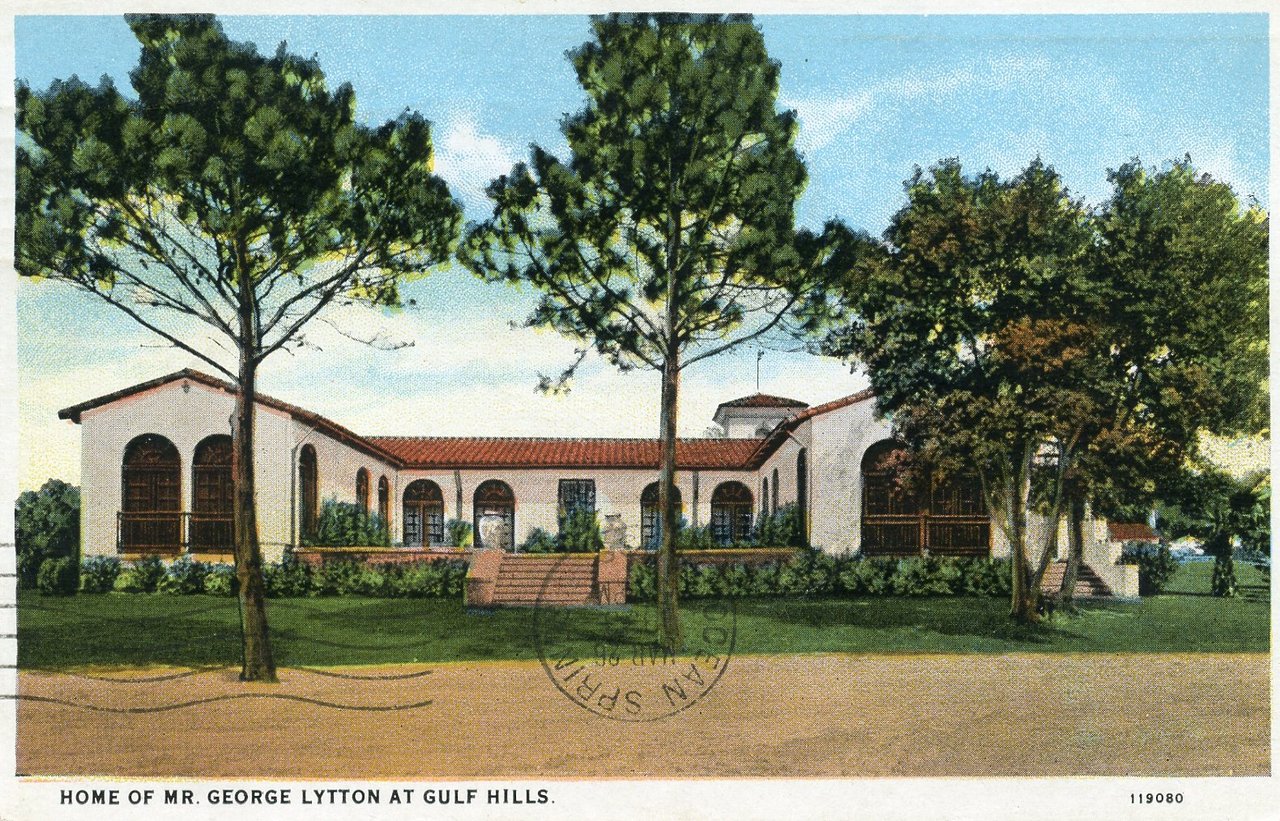
The bayou orientation predates the golf course and the hotel by decades. Before Gulf Hills was a resort community, the area along this bend was a small fishing settlement known as Bayou Puerto, sustained by fishing, charcoal-making, and small-scale farming. That changed in September 1925, when developer Harvey Branigar and his brothers purchased roughly 700 acres along Fort Bayou with plans to build a winter retreat for wealthy Midwesterners. The hotel that grew out of that plan opened in 1927 with Spanish Revival architecture, and a recent renovation kept that thread visible rather than erasing it, adding terrazzo floors, rope lighting, and archival photography alongside regional art instead of stripping the building down to something generic. The property's own history, and the travel write-ups that repeat it, note visits from Elvis Presley during the resort's early decades, one more layer in a building that has stayed occupied and relevant for a century instead of fading into a preserved museum piece.
The Golf Course Changed Hands. The Restaurant Didn't Move.
Gulf Hills Golf Club, opened the same year as the hotel in 1927, has been through its own changes without losing its place at the bend. The nine-hole course was redesigned in 2020 and a new driving range followed in 2021, and the club came under new local ownership when the Byrd family took it over and reopened it for the surrounding community. Capone's stayed put through the transition, and it functions less like a clubhouse snack bar and more like the neighborhood's actual dining room. There's a ribeye steak dinner special every Friday night, trivia at the lounge every Tuesday at 6pm, and, in a detail that says more about the neighborhood's boundaries than any subdivision map could, delivery service that runs specifically to Gulf Hills addresses Wednesday through Monday between 5 and 8pm. The restaurant's delivery zone is, in effect, the neighborhood's footprint.
Follow the Bayou and You End Up at The Shed
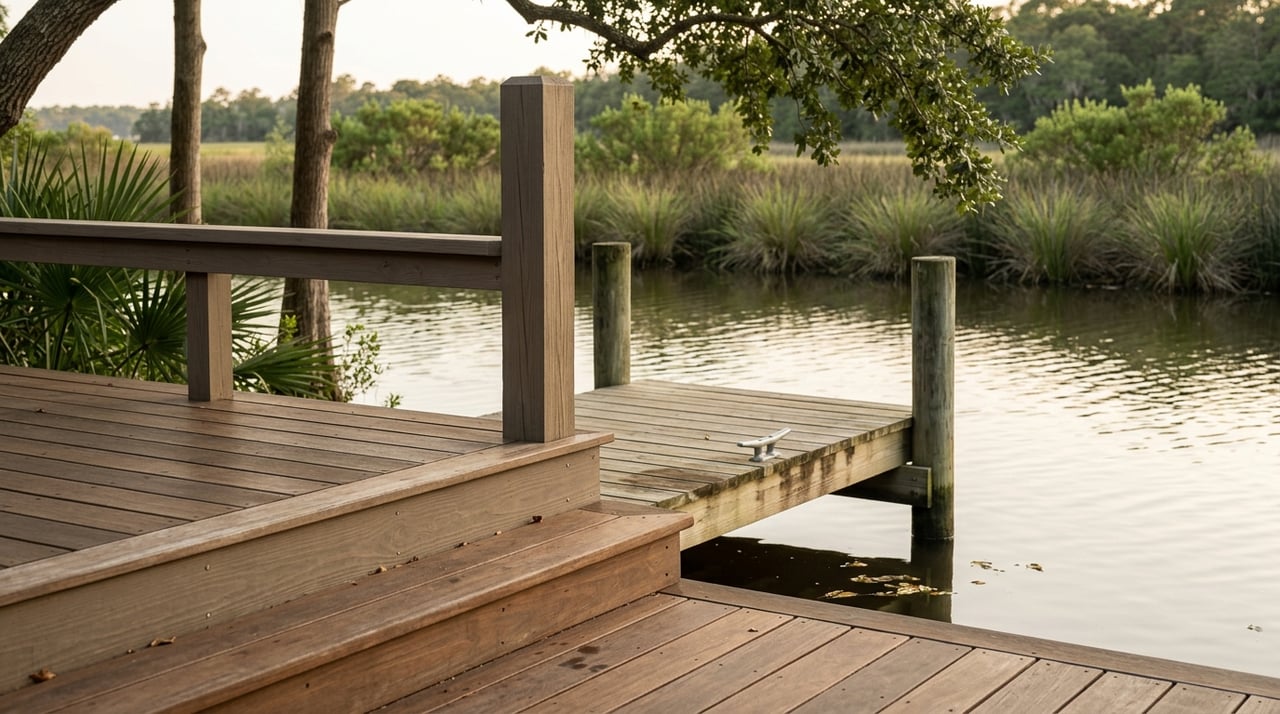
Keep following Fort Bayou north past the hotel and the golf course and the water changes character. South of the bend, near the hotel, it runs wide and marshy, popular with powerboats and the site of one of the area's larger paddling events. North of I-10 it narrows and gets shaded, winding past magnolias and wild roses until it opens onto a dock behind The Shed BBQ & Blues Joint, the pecan-smoked barbecue restaurant that Brad Orrison and his sister Brooke Lewis opened in 2001 with their brother Brett running the sound system for a live blues stage. The Shed has since won the Grand Prize at the Memphis in May World Championships twice, and its dock on Old Fort Bayou runs 157 feet, long enough for regulars to tie up a boat or a kayak instead of driving in.
For years, the neighborhood's biggest paddling event physically connected these two points. A 2011 recap of the second running of Battle on the Bayou described 190 boats launching from Gulf Hills Resort and paddling nearly 10 miles up Fort Bayou to finish at The Shed. The race has since shifted format, and the 2026 edition runs as an out-and-back course of roughly 8 miles, plus a shorter 4-mile heat, both starting and finishing back at Gulf Hills instead of ending upstream. The route changed, but the mental map didn't. Ask a longtime resident where the bayou goes and they will still describe it in terms of the hotel end and the Shed end, because those are still the two places worth paddling to.
Here's how those two ends actually compare, side by side:
| Gulf Hills bend (Hotel + Capone's) | Upstream end (The Shed) | |
|---|---|---|
| Built | Hotel and golf club, 1927 | Restaurant, 2001 |
| Sound after dark | Sunset Lounge, quiet poolside evenings | Live blues stage, Friday and Saturday nights |
| What's on the table | Friday ribeye special, Italy Terrace lunch service | Pecan-smoked brisket, pulled pork, pig wings |
| How you get there | Walk, golf cart, or short drive | Boat, kayak to the 157-foot dock, or car |
September Is When the Water Gets Loud
The clearest proof that Gulf Hills organizes itself around this bend rather than a downtown venue shows up every September, when the Mississippi Songwriters Festival comes to town. The 2026 festival runs September 18 through 20, bringing roughly 200 singer-songwriters to perform across ten venues in Ocean Springs and Gautier, all of it free to the public. Gulf Hills Hotel + Resort serves as the festival's host hotel, which means one of the region's signature music weekends stages part of itself on the same water where the golf course and the restaurant already sit, rather than in a downtown theater or convention space. If you live in Gulf Hills, that weekend is the one time of year the bend gets genuinely busy after dark.
What This Means If You Already Live Here
- If you want the hotel's waterfront quiet without the crowd, go before 6pm. The Sunset Lounge picks up after that.
- Capone's runs trivia every Tuesday at 6pm and delivers to Gulf Hills addresses Wednesday through Monday, 5 to 8pm, a detail worth knowing if you'd rather stay home some nights.
- Paddling north from the hotel toward I-10 gets you shade and stillness. South stays wide, windy, and better suited to a powerboat than a kayak.
- Block off September 18 through 20 if you'd rather avoid festival traffic near the hotel, or lean into it if live acoustic sets are your thing. Either way, it's happening on your bend of the water.
Living on a bayou instead of a Main Street changes the rhythm of a neighborhood in ways that don't show up on a listing sheet. It shows up in who delivers to your door, which direction you paddle on a Saturday, and which weekend in September your street gets loud. Rain Residential spends as much time tracking those rhythms as it does tracking prices, because the two aren't as separate as they look. If you're curious what else that stretch of Fort Bayou tells you about calling Gulf Hills home, talk with an advisor.