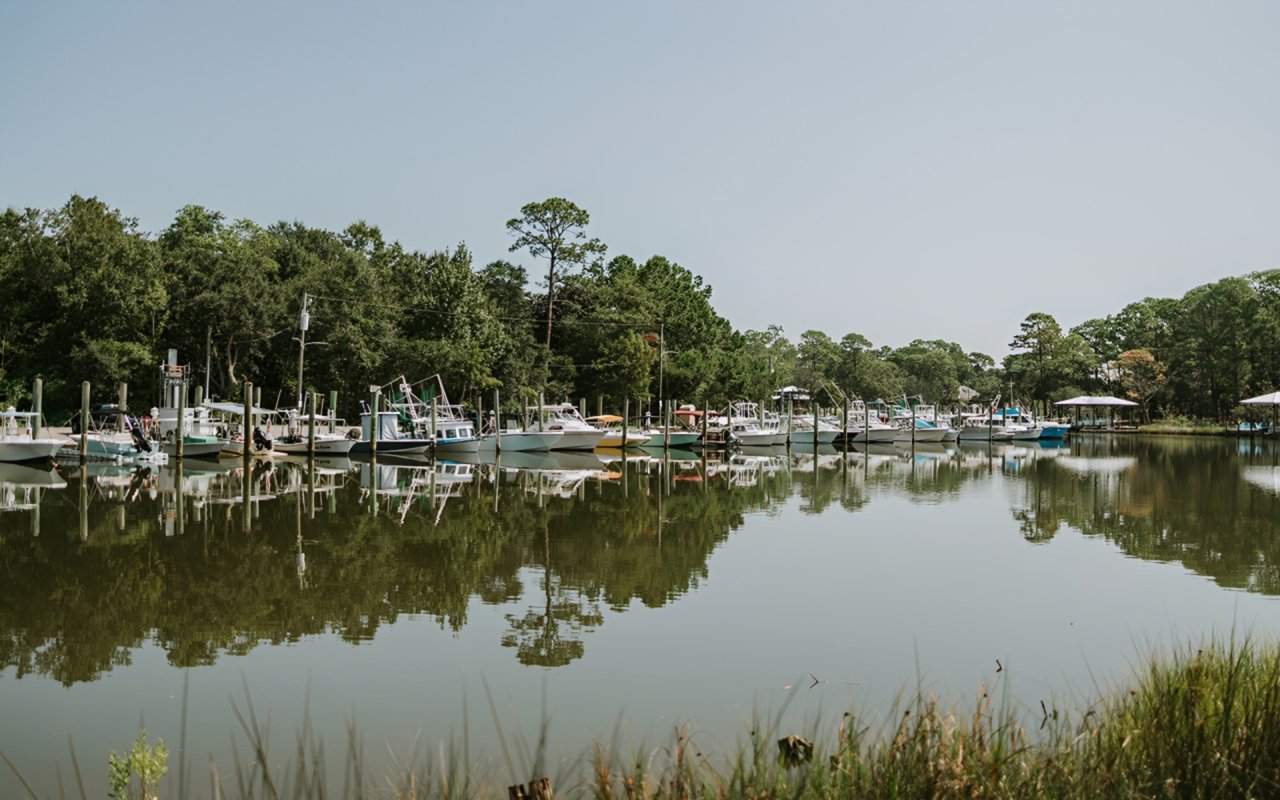
Mississippi's 2026–27 public oyster season opened at legal sunrise on Thursday, October 1. Pass Christian Harbor, at 104 South Market Street, is one of only three state check stations listed for the season. Even so, the boats did not head for the reefs that carry the town's name. Pass Christian Tonging and Pass Christian Dredging were left off the opening list. Those two reefs produced most of the harvest in the best season Mississippi has had in more than a decade, and this fall's rules are mostly a response to how hard they were worked.
Last Season Ran Through Pass Christian
The Mississippi Department of Marine Resources gave the Commission on Marine Resources its season review on September 15. The 2025–26 season ran from October 13, 2025 to April 30, 2026, with 136 days of open harvest and 50,427 sacks landed. DMR called it the largest harvest since 2013. The same slide says most of the effort was on Pass Christian Tonging and Pass Christian Dredging.
That season matters because of what came before it. Mississippi Today noted that the industry is still rebuilding from the 2019 Bonnet Carré Spillway openings, which flooded the Mississippi Sound with fresh water. After those openings, MDMR estimated oyster mortality at nearly 97% across the major reefs of the western Sound. In a 2026 timeline, a 50,000-sack year counts as a recovery. Most of that recovery was harvested within sight of the Pass Christian waterfront.
Thirty Percent Is the Line
DMR manages each reef with a seasonal quota of 30% of its estimated oyster population. Because the quota rides on population estimates, the number of sacks it allows moves up or down with each year's survey. Mississippi Today reported that the 30% quota stays in place for 2026–27. It also reported that several reefs went past it last season.
Here is how last season's harvest share compares with this fall's opening list:
| Reef area | Share harvested in 2025–26 | On the Oct. 1, 2026 opening list |
|---|---|---|
| Pass Christian Tonging | About 41% | No |
| Pass Christian Dredging | About 37% | No |
| Pass Marianne | About 34% | No |
| Henderson Point | About 8% | Yes, Area II "E" |
| St. Joe | About 1% | Yes, Area I "B" |
Every reef harvested past the 30% line stayed closed, while Henderson Point and St. Joe, where harvest barely reached single digits, opened. The full opening list also included Waveland and St. Stanislaus in Area II "B" and Biloxi Bay Reef in Area V "A," both tonging only. At the September 8 stakeholder meeting, held in Pass Christian, Shellfish Bureau director Jason Rider steered fishermen toward Henderson Point and St. Joe. Population estimates had risen on those reefs, and harvest pressure there had been fairly low.
Not every fisherman thinks the quota was enforced firmly enough. "They keep the reef sometimes open too long in areas," a fisherman named Miller told Mississippi Today. "Once they meet their quota, they need to shut it down." The outlet said it had asked DMR why harvest went over 30% in some areas and how the quota will be managed this season, and it had not received an answer when the story ran.
What the Divers Found Under the Home Reefs
The Sound-wide numbers look strong. DMR's survey estimated just under 400,000 sacks of oysters across the surveyed reefs, compared with about 275,000 a year earlier. Rider said the department was seeing growth "across nearly every size class with the spats."
The survey found something different on Pass Christian's reefs. Divers collected 130 samples at 65 sites on Pass Christian Tonging, a reef of about 575 acres, and found lower density in every size category and fewer market-size oysters than in earlier years. About 60% of the oysters there, or 14,691 sacks, sit on cultch plants. Those are beds of limestone and shell the state lays down to give young oysters something to attach to. Pass Christian Dredging is much larger at about 1,194 acres. Divers took 154 samples at 77 sites there and found the same drop across every size category. Roughly 90% of its market-size oysters are on cultch plants, and DMR recorded higher natural mortality after a low-salinity event.
Harvest pressure was only part of it. MDMR officials told Mississippi Today that Pass Christian Tonging, Pass Christian Dredging and Pass Marianne were among the areas hit by heavy rain and lower salinity this summer. These reefs came off a heavily fished season and then sat through a summer of fresh water.
The state's response shows up in where it spent this summer's restoration money. DMR planted cultch on 236 acres in June, July and August. Of that total, 135 acres went to the two Pass Christian reefs: 65 acres of limestone plus spat on shell at Pass Christian Dredging and 70 acres of limestone at Pass Christian Tonging. Pass Marianne got 72 acres, St. Stanislaus 19 and St. Joe 10. More than half of this year's restoration work went to the reefs named for the town, and those are the same reefs left out of the opening.
Opening Morning, Reported From Pass Christian
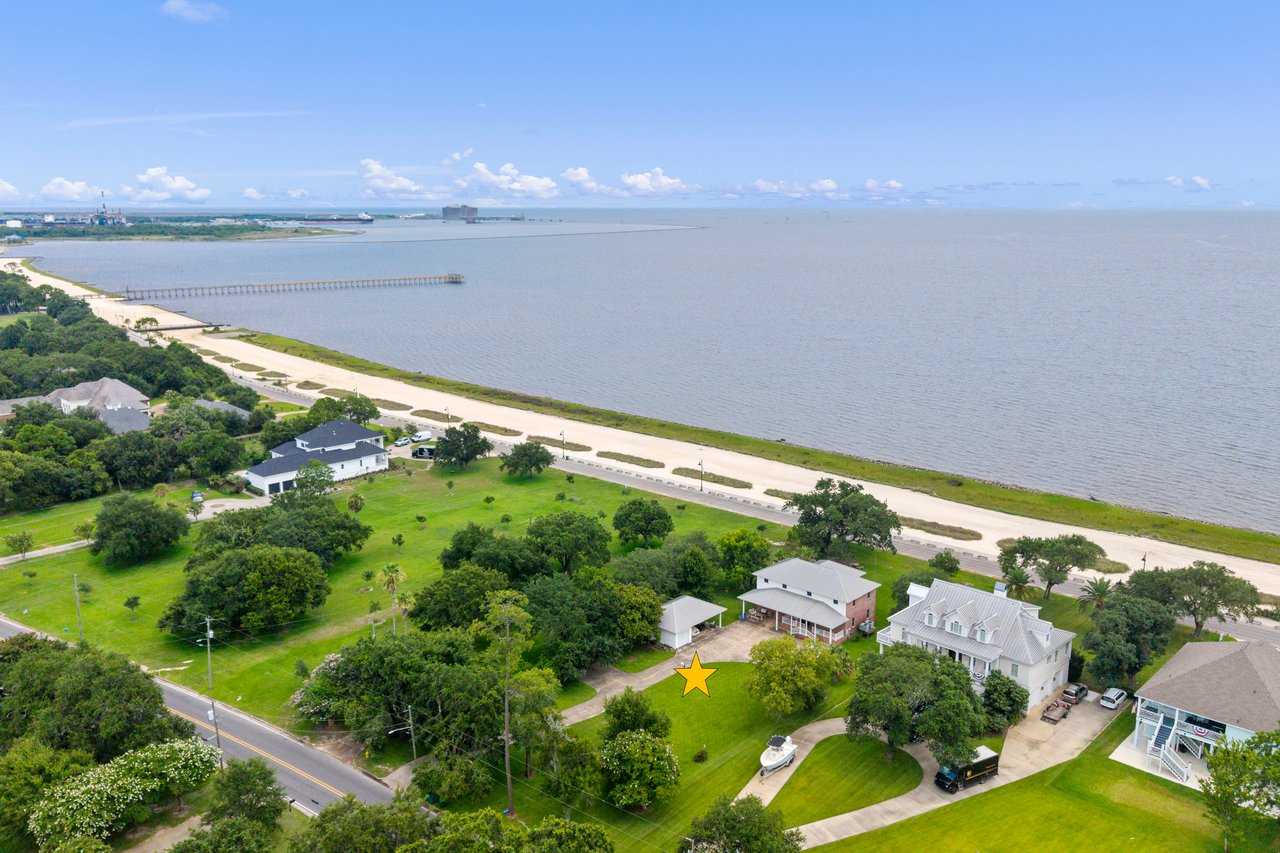
Even with those reefs closed, the first-day story came from Pass Christian. In a report datelined there, WLOX said about 15 boats were on the water Thursday morning, working in strong wind.
"It was slim pickings at first, but we went and caught some. We knew where they were at."
James "Catfish" Miller, an oysterman with Second Wind, gave that account of the morning to WLOX. Dylan Cordova told the station that the first part of any season is trial and error, until crews find spots with clean oysters.
From the water, the catch goes to the dock. Bill Bradley, owner of Bradley's Seafood Dockside, told WLOX that boats had to be in by noon so crews could offload the oysters and get them into a cooler. From there, the oysters go to shucking houses and restaurants. "Today was a little disappointing, but it's the first day," Bradley said. WLOX reported that more than 100 oyster licenses had already been sold, and that number was expected to grow.
The rules behind that morning come from DMR's September 25 release. In October, harvest runs from legal sunrise until a 12 p.m. check-out, with no harvest on Sundays. Commercial boats can take 15 sacks a day per resident tonging vessel and 20 per dredging vessel. Crews can launch from a remote site after checking in, but only south of the CSX Railroad bridges, and they must come back to the same check station by the most direct route.
Three Days In, the Rain Closed Everything
On October 4, DMR closed all harvest areas because rainfall went past the limits in its management plan. The closing order covers Areas I "B," II "B," II "E" and V "A," which is the entire opening list, Henderson Point included. As of October 12, DMR's season page still showed every area closed, and we found no reopening order.
The rain that closed the season is the same force that hurt the Pass Christian reefs this summer, when heavy rainfall and low salinity pushed natural mortality up on the dredging reef. The October closure comes from the management plan's rainfall criteria and can be lifted, while a summer die-off has to be rebuilt by cultch and time.
The Calendar From Here
When areas reopen, the season's fixed dates are already set. According to DMR's season page:
- All Mississippi waters and public reefs are closed on Sundays.
- Waters are closed on Thanksgiving Day, Thursday, November 26, 2026.
- Harvest stops and vessels must check out by 12 p.m. on Christmas Eve, Thursday, December 24. Waters stay closed through Sunday, December 27, and reopen at legal sunrise on Monday, December 28.
- Harvest stops by 12 p.m. on New Year's Eve, Thursday, December 31. Waters stay closed through Sunday, January 3, 2027, and reopen at legal sunrise on Monday, January 4.
The buoys tell the same story. White buoys may mark tonging-only areas, including all reefs within one mile of the coastline in Areas I "B" and II "B." Red buoys mark areas closed inside otherwise open zones, and that includes the 2026 cultch plants. Much of this summer's new limestone sits on the Pass Christian reefs, so the town's restoration work is now marked by red buoys on the water.
Recreational harvesters have their own limit of three sacks per licensed resident in any seven-day period. Open or closed status changes with the weather. DMR posts it through a 24-hour Oyster Information Hotline at 228-374-5167 or 800-385-5902, and through an interactive harvest map that shows each growing area in red or green. On land, the state's Mississippi seafood retail directory lists Crystal Seas Seafood at 166 West North Street in Pass Christian as an oyster seller.
At the September meeting, DMR executive director Joe Spraggins set the bigger goal: rebuilding Mississippi's oyster reputation "by bringing in 100,000 sacks of market-sized oysters." Last season brought in about half that. How far Mississippi gets toward that goal depends heavily on the 135 acres of new cultch on the Pass Christian reefs, which sat out this year's opening day.
Living near a working harbor means keeping a second calendar, set by check-out times, closure orders and boats coming in before noon. If you're thinking about a home or second home near the Pass Christian waterfront and want to understand how the harbor's seasons affect daily life there, Rain can walk you through it. Talk With an Advisor.
This article is general information, not legal, tax or financial advice. Consult a qualified professional about your situation.